
Must-Read Article of the Month
DECember 2025
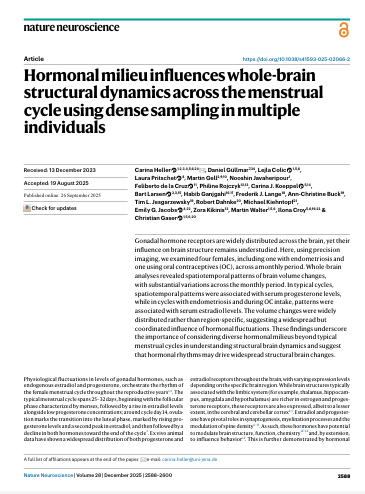
Title: “Hormonal Milieu Influences Whole-Brain Structural Dynamics Across the Menstrual Cycle Using Dense Sampling in Multiple Individuals”
Hormonal milieu influences whole-brain structural dynamics across the menstrual cycle using dense sampling in multiple individuals. Nature Neuroscience. 2025;28(12):2588–2600. doi:10.1038/s41593-025-02066-2
What if the key to understanding women’s pain has been cycling in front of us all along? This article is an essential read for anyone committed to delivering pain care that is inclusive, individualized, and evidence-based.
By integrating advanced neuroimaging data, the authors have demonstrated how fluctuations in estrogen and progesterone modulate pain processing across the menstrual cycle. PET, fMRI, and connectivity analyses reveal meaningful changes in regions such as the insula, anterior cingulate cortex, amygdala, and periaqueductal gray, providing a mechanistic explanation for cycle-related variations in pain sensitivity and symptom severity.
The authors clarify why migraine, pelvic pain, musculoskeletal pain, and fibromyalgia often intensify at specific hormonal phases and why procedural or pharmacologic interventions can show variable effectiveness depending on timing. These shifts go beyond anecdotal trends to define measurable neurobiological changes with direct implications for patient assessment and treatment planning.
This review emphasizes incorporating menstrual history into routine evaluation and highlights opportunities for hormone-informed precision medicine, including optimized procedural timing, individualized neuromodulation strategies, and patient education that validates physiologic symptom fluctuations.
- Puja C. Shah, DO
November 2025
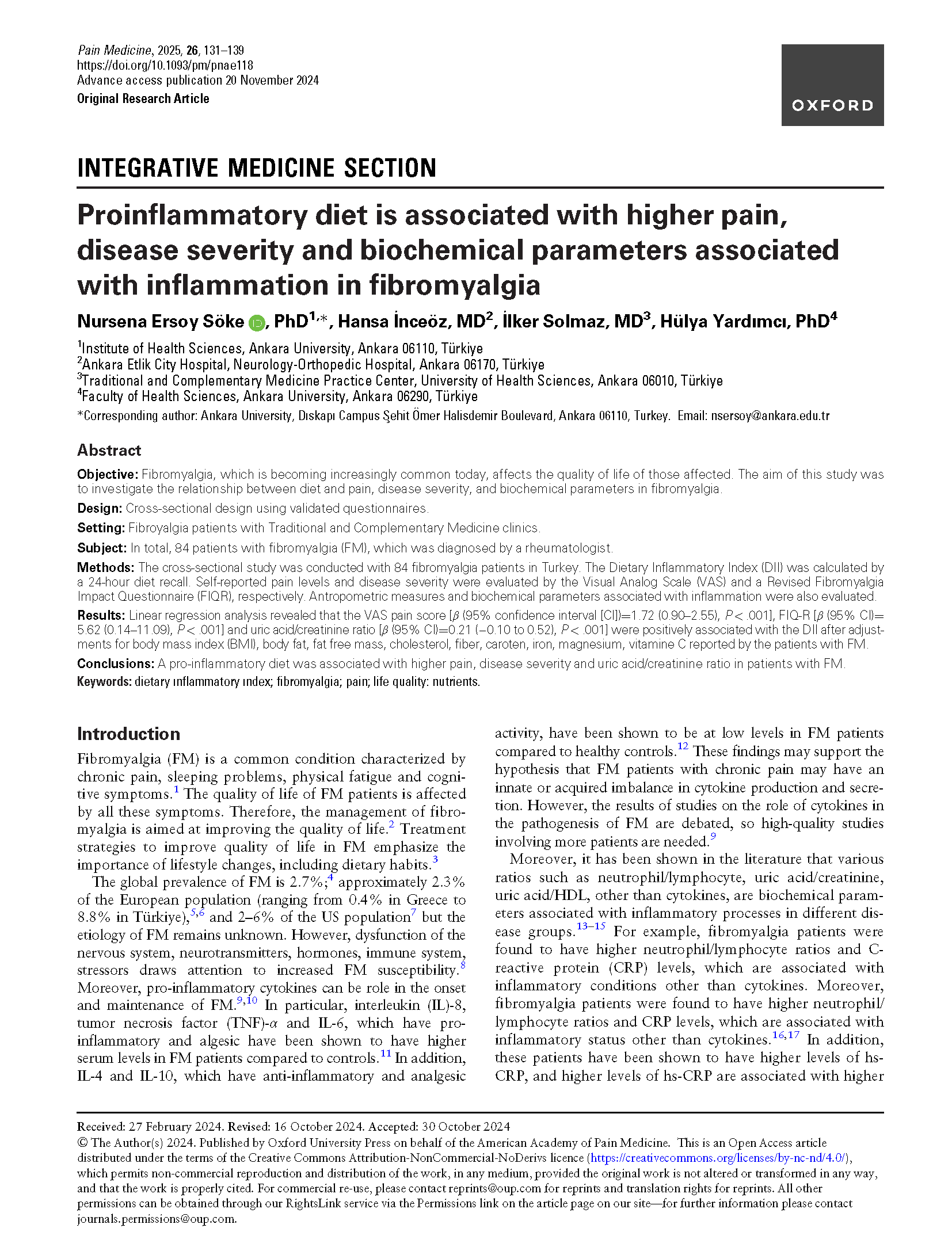
Title: "Proinflammatory diet is associated with higher pain, disease severity and biochemical parameters associated with inflammation in fibromyalgia"
Ersoy Söke N, İnceöz H, Solmaz İ, Yardımcı H. Proinflammatory diet is associated with higher pain, disease severity and biochemical parameters associated with inflammation in fibromyalgia. Pain Med. 2025;26(3):131-139. doi:10.1093/pm/pnae118
In this study, pro-inflammatory diets were significantly associated with higher pain levels, severity of fibromyalgia, and increased inflammatory markers such as the uric acid/creatinine ratio. This article determines that anti-inflammatory diets correlate with decreased pain and severity of fibromyalgia, suggesting that the inflammatory potential of certain diets may play a role in the severity of symptoms for those suffering from fibromyalgia. Dietary changes and interventions can play a role for fibromyalgia management. Future studies are recommended to determine specific diet recommendations and further investigate the underlying mechanisms of pain improvement.
- Crystal Joseph

October 2025
Title: Spinal Cord Stimulation plus Conventional Medical Management vs CMM Alone for Severe, Non-Surgical, Refractory Back Pain: A randomized clinical trial followed by crossover
Journal: Regional Anesthesia & Pain Medicine, October 2025
Tagline: This pivotal RCT defines the future of spinal cord stimulation for non-surgical spine pain—and reignites the debate on where evidence ends and perception begins.
Summary:
The SOLIS trial delivers long-awaited, Level 1 evidence for spinal cord stimulation in non-surgical back ± leg pain—a population often dismissed as “not surgical enough” yet underserved by conservative care. Conducted across multiple centers under an FDA-IDE design, the study found that patients receiving SCS + conventional medical management achieved markedly greater pain and functional improvement than those on medical therapy alone, with benefits sustained through 12 months and crossover. In a year defined by scrutiny of interventional spine procedures, SOLIS offers a rigorous, practice-shifting data point that challenges the field to re-examine its assumptions. Whether viewed as validation or provocation, this paper is a must-read for every clinician navigating the evolving evidence base of neuromodulation.
- Ceci Guerrero, DO
Citation: North J, Calodney A, Trainor D, et al. Reg Anesth Pain Med Epubahead of print: doi:10.1136/rapm-2024-106335
September 2025
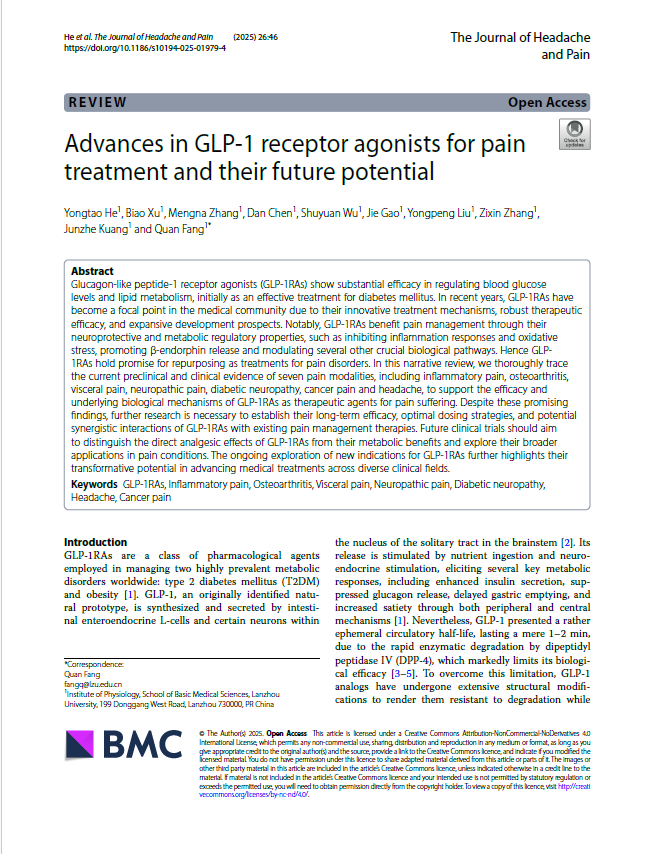
“Advances in GLP-1 receptor agonists for pain treatment and their future potential” highlights emerging evidence that GLP-1 receptor agonists (GLP-1RAs), traditionally used for diabetes and obesity, may offer significant benefits in pain management. Preclinical and clinical studies indicate that GLP-1RAs reduce inflammation, oxidative stress, and neurodegeneration while enhancing β-endorphin release and neuroprotection. Their therapeutic potential spans multiple pain conditions, including osteoarthritis, neuropathic and visceral pain, headaches, diabetic neuropathy, and cancer-related pain. Notably, GLP-1RAs could transform pain treatment by providing effective relief without the tolerance or dependence risks associated with conventional medications. Although human studies remain limited, these findings position GLP-1RAs as a promising, non-opioid approach at the forefront of translational pain medicine.
- Rebecca Takele, DO
Citation: He Y, Xu B, Zhang M, et al. Advances in GLP-1 receptor agonists for pain treatment and their future potential. J Headache Pain. 2025;26(1):46. doi:10.1186/s10194-025-01979-4.

August 2025
“To Trial or Not to Trial Before Peripheral Nerve Stimulation for Chronic Pain: A Retrospective Multicenter Comparative Analysis of Temporary-to-Permanent and Direct-to-Permanent Implantation Approaches”
Puja C. Shah's summary: “This provocative and timely multicenter retrospective study dives into a hot topic in interventional pain: is the traditional peripheral nerve stimulation (PNS) trial always necessary before permanent implantation? Comparing outcomes from temporary to permanent versus direct to permanent PNS implantation pathways, the authors reveal surprising insights on patient selection, success rates, and complication profiles. While trial periods have long been considered standard, this analysis suggests that skipping the trial in select patients may not compromise and could even streamline clinical outcomes. The study also highlights differences in resource use and patient experience, offering a fresh perspective on balancing procedural efficiency with individualized care. Pain specialists, fellows, and residents alike will find this article essential for understanding evolving best practices and reconsidering how trials fit into their treatment algorithms. The findings open the door for further prospective research and may influence future guidelines on PNS implantation strategies.”
Puja C. Shah, DO

July 2025
"This is a controversial, must-read editorial piece that provides an introspective analysis of the current challenges facing clinical research in interventional pain medicine and neuromodulation. Therefore, it is essential reading for all practitioners, particularly early-career physicians, fellows, and residents. The authors critically examine the pervasive influence of industry on research, highlighting how study designs are often manipulated to favor commercial interests and result in predictable outcomes or overestimations of therapeutic benefits. Furthermore, the piece addresses the complexities of interpreting marketing language and calls for a heightened awareness of significant alterations in study design. A key takeaway for future physician researchers, this article proposes valuable research ideas, offering specific examples of study design improvements and posing higher-level questions for investigation. In conclusion, it champions the core principles of patient-centered care, the pursuit of more significant and longer-term outcomes, and a commitment to evidence-based practices over profit-driven narratives."- Robin Mata, DO MPH